
Mental health education pathways
The mental health and addiction workforce is made up of diverse people who bring a range of skills and knowledge to provide invaluable support for the wellbeing of tāngata whai ora, whānau, and communities. The workforce is largely made up of support workers and registered health professionals. The workforce includes cultural roles, peer support and other lived experience workers, whānau workers, and health assistants and coaches; along with nurses, occupational therapists, social workers, addiction clinicians and counsellors, psychologists and psychotherapists, medical professionals, team leaders, administrators, and managers.1 The workforce supports tāngata whai ora and whānau in a wide range of settings including mental health and addiction services, hospitals and emergency departments, non-government organisations (NGOs), primary care, communities, schools, and justice settings.
Want to become part of the mental health workforce?
There are many key roles in Aotearoa New Zealand’s mental health sector, including:
- consumer, peer support, lived experience, and whānau workers
- support workers
- cultural workers
- registered nurses
- social workers
- counsellors
- occupational therapists
- psychologists
- addiction practitioners
- health improvement practitioners (HIPs) and health coaches.
This webpage provides information on the qualifications and experience needed to work in these roles, scholarship and apprenticeship opportunities that can support your study, and links to key resources.
- For more information on education and training pathways for working in addiction-specific roles such as addiction practitioners, visit the addiction career and education pathways tool on the Te Pou website.
- For more information on pathways to becoming a HIP or health coach, visit the integrated primary mental health and addiction (IPMHA) webpage on the Te Pou website.
This webpage provides general information on common education pathways and role descriptions for key mental health sector roles. It aims to provide guidance for people interested in looking further into options available to them. Individual career journeys can vary though depending on your experience and circumstances. It is a good idea to check with relevant organisations and training providers for more detailed information as requirements and the availability of programmes and support options can change over time.
The roles covered in this webpage are part of a wide and diverse range of mental health sector roles, all of which play a vital role in supporting tāngata whai ora. Some examples of additional roles, not covered in detail here, include diversional/recreational therapists who support people through activities, youth workers who support rangatahi, and vocational and housing workers who support people with broader areas of wellbeing. These roles also require specific education and training pathways relevant to their mahi. To learn more about a specific role that interests you, job advertisements and employer websites can provide more information. You can also explore career ideas using the Tahatū | Career Navigator website.
What skills do I need to work in mental health?
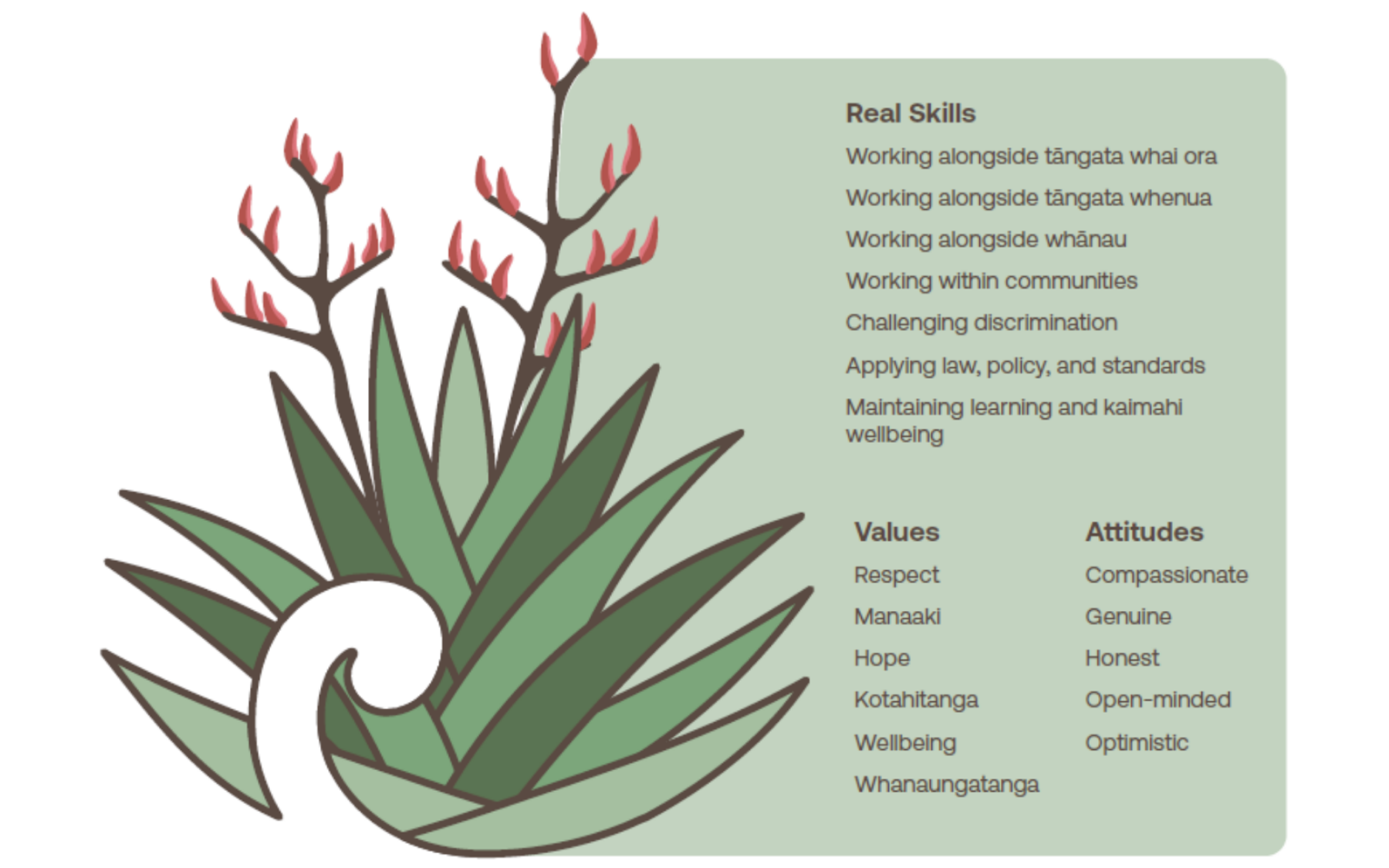
Keeping it Real | Kia Pono te Tika outlines the key values, attitudes, and skills that all kaimahi working in any mental health, addiction, and other health services in Aotearoa should have. Upholding these ensures tāngata whai ora and whānau have positive experiences and outcomes when seeking support for their mental health and wellbeing, and that services provide high quality support. Te Tiriti o Waitangi principles underpin Keeping it Real. The framework complements organisational kaupapa and expectations, professional competency frameworks, and provides a foundation for kaimahi in roles that are not guided by a professional competency framework. This includes all education and registration requirements for working in mental health.
Read more about what study you might need and scholarship opportunities.
Read more about a range of mental health roles and study pathways.

Resources
Te Pou has a wide range of evidence-based resources and tools to help the addiction and mental health workforce.
Learn MoreOur work
Te Pou works alongside addiction and mental health services to understand their priorities and workforce challenges.
Learn More