The Difference: season two episode six
See people for who they are | Support work from a cultural lens
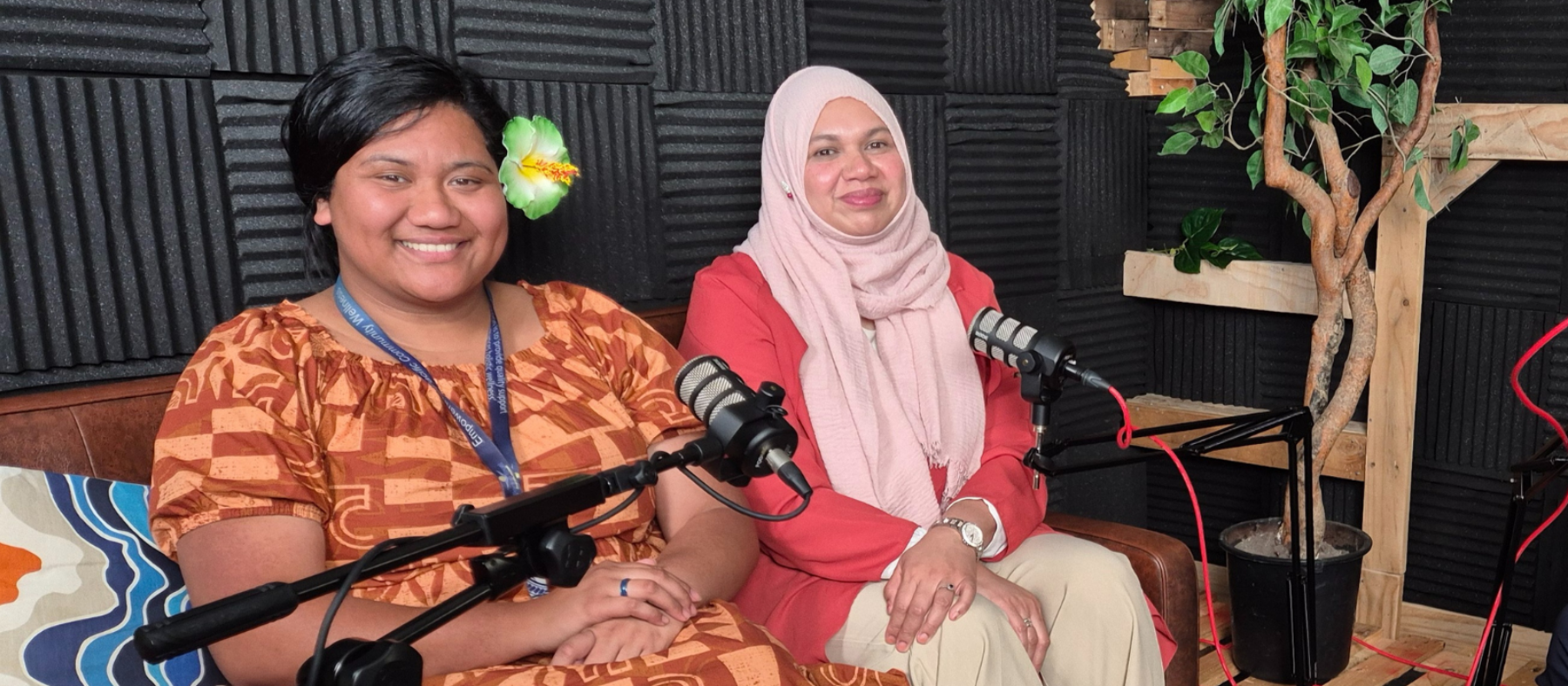
Listen to season two episode six of The Difference featuring Janifa Bhamji (Kāhui Tū Kaha) and Lydia Gafoi (Penina Trust).
Where to listen:
Information on the topic
Culturally appropriate support is a fundamental right
Right 1(3) of the Code of Health and Disability Services Consumers’ Rights states that “every consumer has the right to be provided with services that take into account the needs, values, and beliefs of different cultural, religious, social, and ethnic groups, including the needs, values, and beliefs of Māori”.1
For many tāngata whai ora and whānau, support that is grounded in their own cultural values, worldview, and practices (such as kaupapa Māori and Pacific-led services) can lead to positive experiences and outcomes.2
Cultural safety benefits everyone
Cultural safety is about self-reflecting on your own identities and culture (including your attitudes, assumptions, power, privileges, and biases) and how these impact on the support you provide.4 It is important to recognise diverse understandings of health and wellbeing and understand the culturally-safe practices defined by tāngata whai ora, whānau, and communities. Cultural safety is also about being accountable for contributing to health equity, challenging discrimination, and continuous improvement.4
Tips from The Difference podcast
Meet people where they’re at. Be attentive to their needs. Be present in the moment of hearing their story. Use all your senses to be present. Bring your authentic self into the moment.
Be aware of the beliefs and values of the people you are supporting. Do a bit of research first and keep learning from people – every time you meet them.
Working with someone from your own community is a strength. It brings instant connection and belonging. People thrive when they are supported by someone who understands them.
Getting support from people who understand your culture, your values and your lived experience builds trust within the whānau.
Sometimes mainstream services don’t align with people’s values. Communities deserve support that aligns with their core values.
Respect that everybody is different. Recognise what support you need to adapt or adjust. Be flexible.
Come with an intentional non-judgmental approach.
Compassion and kindness go a long way.
Reach out to other organisations and community-based groups for support and advice.
It is so important to also look after yourself. Try not to take your work home. Being able to talk to someone about your work is vital.
Great support workers:
- have a passion for helping or serving people
- have an open mind
- look after their own wellbeing
- can talk and listen
- are open to learning new things
- are adaptable, can work in different environments.
Help people thrive by upholding their mana.
Know your place.
If you don’t connect with a tangata whai ora or whānau, that’s okay.
Relationships are more important than ticking off tasks.
Listen to understand, don’t listen to reply.
Move at the pace of the families you are working with. Let people take their time telling their story.
More information on this topic
- Keeping it Real | Kia Pono te Tika is a framework that describes the values, attitudes, knowledge, and skills required for working effectively alongside tāngata whai ora and whānau experiencing addiction and/or mental health challenges. Keeping it Real | Kia Pono te Tika provides a collection of resources about cultural competency and working alongside different communities, see He kete rauemi: Working alongside tāngata whai ora.
- Keeping it Real | Kia Pono te Tika provides a collection of resources related to the Working alongside tāngata whenua Real Skill, see He kete rauemi: Working alongside tāngata whenua.
- Healthify He Puna Waiora provides information about Cultural competency and cultural safety for healthcare providers.
- Te Rau Ora provides a list of Māori providers across the country, see Find a Māori Provider.
- The Access and Choice website provides a list of kaupapa Māori providers that people can freely access, see Kaupapa Māori Access and Choice providers.
- Le Va offers a cultural competency programme for non-Pacific kaimahi at Ministry of Health-funded services, see Engaging Pasifika.
- The Health Quality & Safety Commission has a series of video modules about understanding bias in health care.
