Advancing least restrictive practice through an Aotearoa lens
-
Publication Date:
27 March 2026
-
Author:
Te Pou
-
Area:
Mental Health, Addiction, Lived Experience -
Related Initiatives:
-
Keywords:
-
Share
-
Share on Facebook -
Share on Twitter -
Share on LinkedIn -
Share by Mail
-
Te Pou is developing a uniquely Aotearoa framework to advance least restrictive practice in mental health and addiction services, aiming for care that is culturally grounded, mana-enhancing, and dignity-focused.
Te Mana Hononga: The power of connection draws on the Six Core Strategies to Reduce Seclusion and Restraint Use©. This approach was originally developed by Kevin Huckshorn and the National Association of State Mental Health Programme Directors. It continues Te Pou’s work since 2013 to support the Six Core Strategies© in Aotearoa.
The framework includes six rautaki (strategies) and helps healthcare kaimahi provide mana-enhancing, culturally grounded, least restrictive care. Key benefits include supporting dignity, safeguarding Te Tiriti o Waitangi, and fostering safety, wellbeing, and connection. It draws on long-held Māori and Pasifika knowledge systems and lived experiences of tāngata whai ora, whānau, and kaimahi.
The name Te Mana Hononga was gifted through kōrero with Māori cultural advisors, kaumātua, and contributors who shared their mātauranga. It highlights the significant role of hononga (relationships) and the vā (relational space) in least restrictive practice. The framework’s strength lies not only in the actions it guides, but also in how we connect with each other.
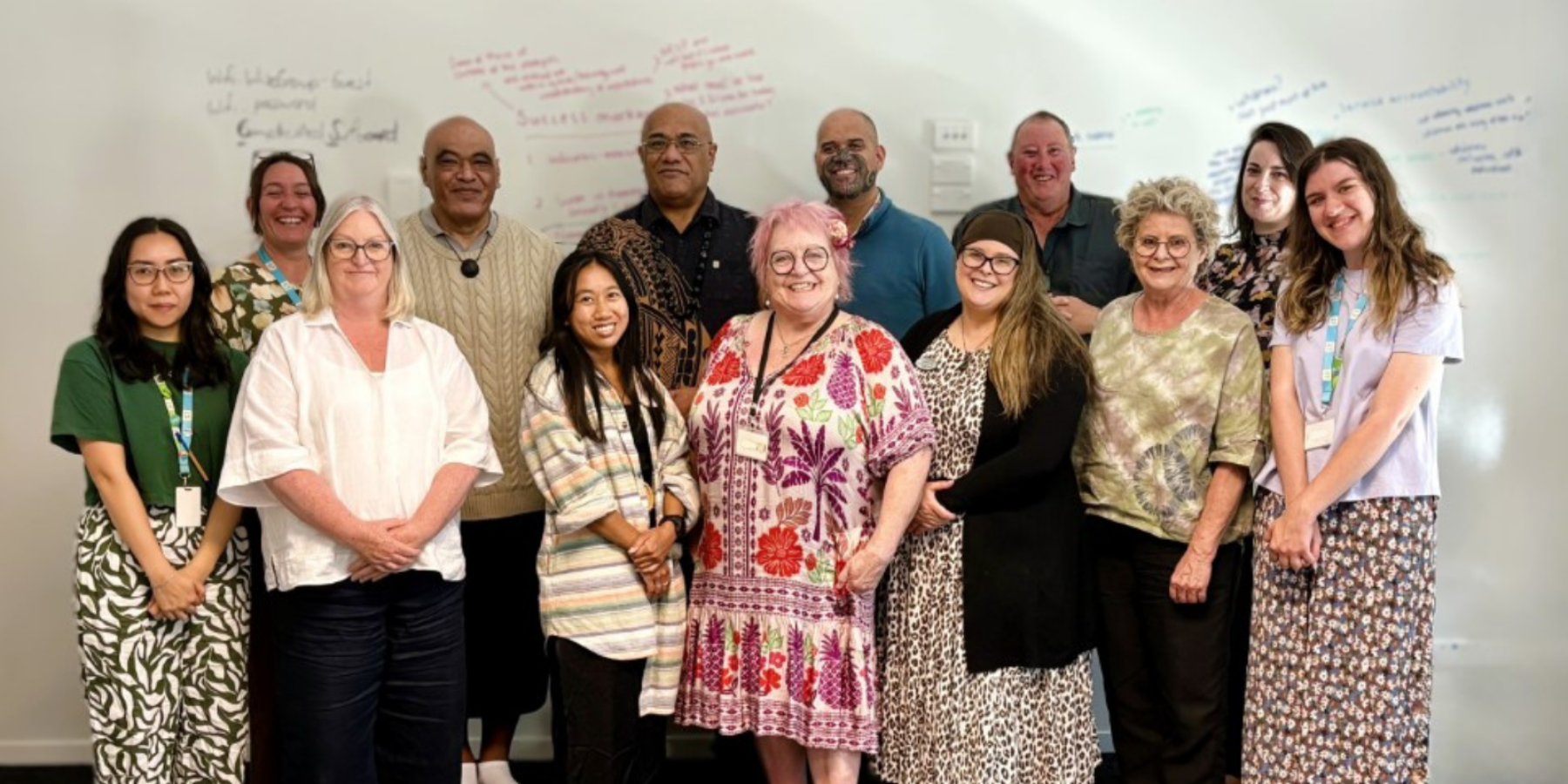
Since last year, there has been continued dialogue around the refresh of the Six Core Strategies© and in late February, people with lived experience, sector leaders, and practitioners joined Te Pou whānau for a wānanga to progress the development of a decolonised, Aotearoa-centric framework to reduce the need for restrictive practices.
Caro Swanson (Principal Advisor – Mental Health and Service User Lead, Te Pou), Manase Lua (Ringa Huti Punga – Pasifika Equity Lead, Wise Trust), and Kahurangi Fergusson-Tibble (Waha Tohutohu Matua – Principal Advisor, Māori, Leadership and System Change, Te Pou) facilitated the wānanga, which was grounded in tikanga, whanaungatanga, and shared purpose.
A key theme of the wānanga was that tāngata whai ora and whānau perspectives must be at the centre of service design, delivery, and leadership, as partners in decision-making and rangatiratanga.
The current Te Pou Six Core Strategies© framework has long supported services aimed at reducing seclusion, restraint, and other restrictive practices. This mahi recognises that achieving truly least restrictive, recovery-focused care in Aotearoa will further enhance outcomes by promoting safety, respect, and culturally responsive care. Achieving this requires transformation, not just adaptation.
The framework recognises lived experience as expertise. It is essential for creating services that uphold dignity, choice, and mana. Co-design, governance participation, and meaningful engagement are core practices.
Ehara taku toa i te toa takitahi, engari he toa takitini
My strength is not mine alone, but from many.
Participants explored leadership as a relational practice to create safe environments, model mana-enhancing care, and value mātauranga Māori and Pasifika knowledge alongside clinical expertise. Tri-leadership models bring together clinical, cultural, and lived-experience perspectives. These models are pathways for equitable decision-making and rebuilding whakapono after harm.
Workforce wellbeing and capability are central to successful implementation of this mahi. When kaimahi feel supported and culturally confident, they bring their whole selves - identity and whakapapa - to work. This leads to improved staff engagement and culturally responsive support for others. It also increases the likelihood of responding to distress with empathy rather than control.
With your food basket and mine, the people will thrive.
The new framework emphasises equity through culturally safe data practices that respect Māori data sovereignty and Pasifika perspectives. It ensures accountability to iwi and communities and by undertaking a culturally grounded approach, such as peer support, sensory tools, tikanga-based responses, and whānau involvement it helps create safe spaces and reduces the need for restrictive interventions, which must be a last resort. They should be brief and followed by a meaningful review that focuses on restoring mana.
Debriefing becomes an opportunity for healing. Tikanga-based and talanoa approaches support listening, accountability, and the restoration of relationships for tāngata whai ora, whānau, and kaimahi. When done well, these conversations turn difficult experiences into learning. This learning strengthens services and communities and supports collective oranga.
Workshops to introduce the framework and support sector implementation will be held in May and June. Guides, tools, posters, and videos are also in development and will help services put Te Mana Hononga into everyday mahi.
More details will follow soon.
Reducing restrictive practices is not just a technical challenge; it is also a moral and cultural one. Services must uphold mana, prioritise relationships, and centre the voices of those most affected.
Te Mana Hononga is grounded in Te Tiriti o Waitangi, Te Ao Māori values, and Pasifika models of wellbeing. Cultural safety is not a separate strategy. Instead, it is embedded across every rautaki, indicator, and resource. It marks a significant step towards a system where care is compassionate, culturally anchored, and truly least restrictive - prioritising people's dignity, safety, sustained relationships, and long-term wellbeing for all.
He waka eke noa
We are all in this together.
