Celebrating innovation and evidence-based practice in the addiction workforce
-
Publication Date:
24 November 2025
-
Author:
Kate Monahan
-
Area:
Addiction -
Share
-
Share on Facebook -
Share on Twitter -
Share on LinkedIn -
Share by Mail
-
Te Pou is proud to recognise excellence in the addiction sector with two awards presented this month at the Cutting Edge Te Toka Tū Moana conference in Rotorua.
The Addiction Workforce Innovation Award and the Addiction Workforce Research Award, both sponsored by Te Pou annually in partnership with dapaanz, acknowledge the inspiring initiatives and research that strengthen the capability, wellbeing and impact of the addiction workforce.
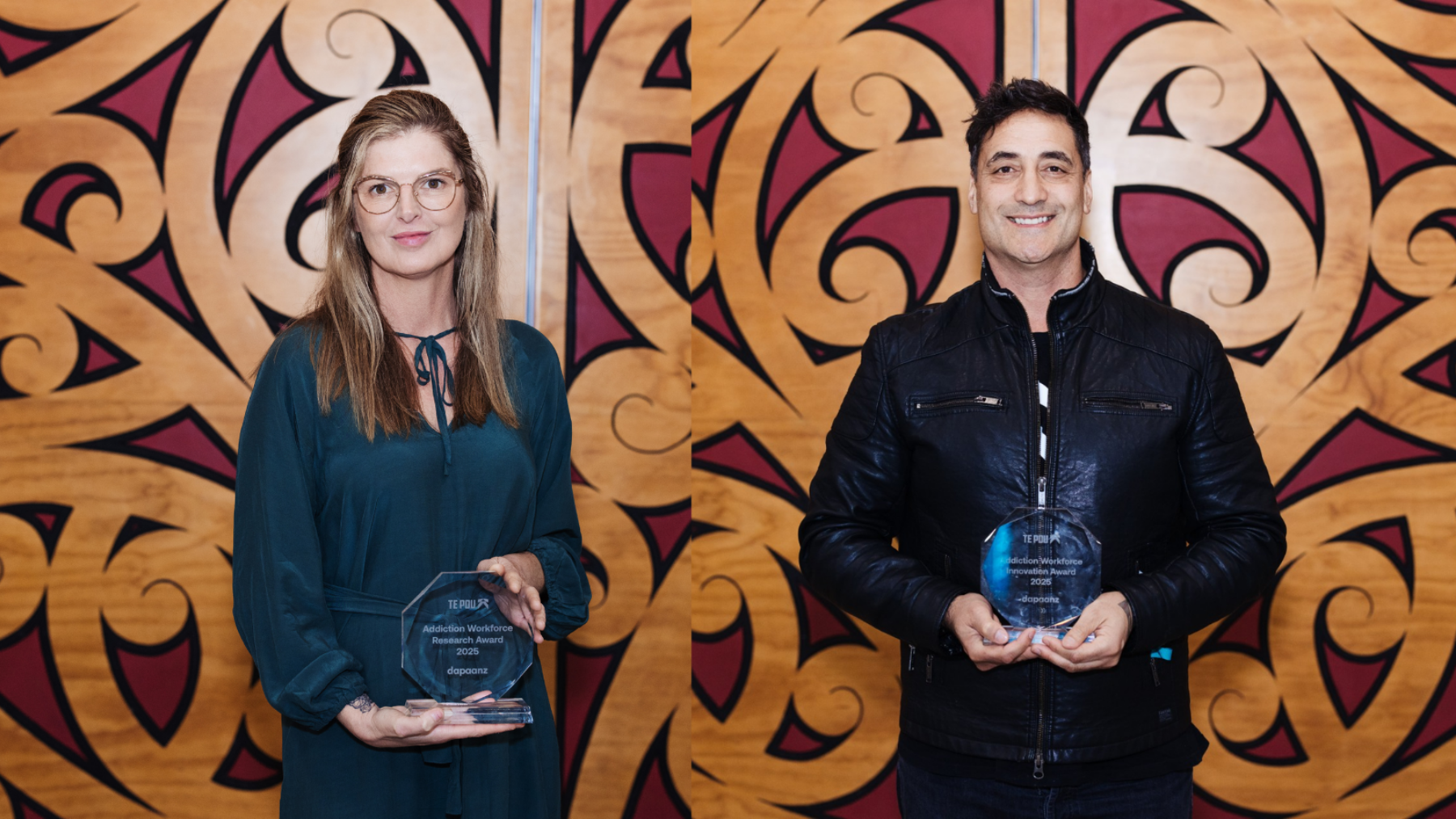
This year’s awards were presented at the conference dinner on 12 November as part of the dapaanz awards to two recipients: Recovery Street won the Innovation Award and Suzette Jackson from Higher Ground Drug Rehabilitation Trust won the Research Award.
Their success reflects the dedication and hard work happening across the addiction sector and supports better outcomes for tāngata whai ora and their whānau.
Addiction Workforce Research Award
- This award recognises exceptional research presented at the Cutting Edge Te Toka Tū Moana conference.
- The Research Award honours work that advances understanding of addiction, treatment pathways and outcomes, and provides insights that directly support workforce development and capability building.
This year’s recipient, Suzette Jackson from Higher Ground Drug Rehabilitation Trust, has contributed a significant body of research studies that strengthens the addiction evidence base in Aotearoa.
“Going up to receive the Addiction Workforce Research award in front of my Higher Ground colleagues and workforce peers was incredibly meaningful,” says Suzette. “It felt like recognition of the organisation’s commitment to research and their investment in me.”
Suzette’s 2019 to 2024 Outcomes Report, which launched earlier this month, draws on six years of data across wellbeing, mental health, trauma and substance use, alongside graduate interviews. The findings offer robust evidence of how people rebuild their lives after treatment, with insights into recovery, social reintegration and whānau wellbeing.
“Higher Ground has an established research programme, and when I started in 2019, they allowed me to bring more curiosity and creativity into how we approached our research,” says Suzette.
“I get to ask the hard ‘why’ questions around people leaving treatment early and how the service could be improved. Our programme director, Maree Matthews, supports trying new approaches that can create real change. Talking with residents and former residents about their lives before, during and after treatment is one of my favourite parts of the job. Surfacing stories that bring the numbers to life.”
Her other research projects include Bridges and Barriers: Determinants of Retention and Departure in a New Zealand Residential Drug Rehabilitation Service, the Corrections Impact Report on justice reintegration, and her PhD on Te Whare Taonga (Higher Ground’s mothers and babies service), the first in-depth study of its kind.
At the Cutting Edge conference, Suzette presented on various research projects including her PhD findings and also led a workshop on working with mothers with substance use disorders.
Congratulations to Suzette for receiving the research award, which recognises all she is doing for the sector through teaching, mentoring, collaborating with others and translating research into training, service design, and policy to grow workforce capability across the addiction sector.
Addiction Workforce Innovation Award
- Judges were looking for applicants who could demonstrate new and effective ways of working that improved workforce wellbeing, strengthen engagement, enhance service delivery and support transformational change across addiction services.
- This award shines a light on organisations that are modelling best practice and contributing to a thriving, well-supported addiction workforce.
This year’s winner, Recovery Street, is a Rotorua-based organisation with a team of ten kaimahi who are reshaping addiction support through their programmes and services, with workforce wellbeing and creativity at the heart of the kaupapa.
"Receiving the Addiction Workforce Innovation Award feels incredibly humbling," said Chris Ranui-Molloy, founder and lead clinician from Recovery Street.
“Recovery Street began back in 2018 and since then there have been thousands upon thousands of volunteer hours poured into this kaupapa, along with the heart, honesty and courage of all our past and current participants. To have that collective effort recognised in this way means a lot. I feel extremely grateful to be honoured like this and to have our community-led, arts-based approach to recovery seen and valued.”
Feedback from tāngata whai ora and whānau show the impact of the programmes, which offer hope and support healing and personal growth.
The various Recovery Street programmes integrate theatre, storytelling and arts-based interventions alongside wisdom from tūpuna to empower tāngata whai ora, kaimahi and whānau. Community engagement and collaboration, including partnering with iwi, hapū and local health, justice and social service providers create integrated pathways for people.
Recovery Street centres lived and living experience within service design and delivery, and workforce wellbeing is also woven through every aspect of their service, fostering leadership pathways for peer workers.
Innovative practices are at the heart of their mahi. One example is their 14-week narrative therapy and re storying programme, in which tāngata whai ora, peers and clinicians co-create personal pūrākau that culminate in a public performance. This process fosters identity, resilience and peer support for participants, while nurturing cultural competence and reflective practice among kaimahi.
“Today we run both staff and client half day and full day programmes, and we are now extending our mahi into the Bay of Plenty region as well. At its core, Recovery Street is about people being truly seen, heard and believed as they reclaim their stories, so this award also belongs to everyone who has ever stepped on stage or into the room with us,” said Chris.
Congratulations to the team at Recovery Street for their transformative, creative approach which combines matauranga Māori, lived experience voices and a trauma-informed practice that inspires kaimahi, tāngata whai ora and whānau, making a real difference to people and communities impacted by addiction.
