
Kenihia Rei-Maynard, peer team coach at Pathways
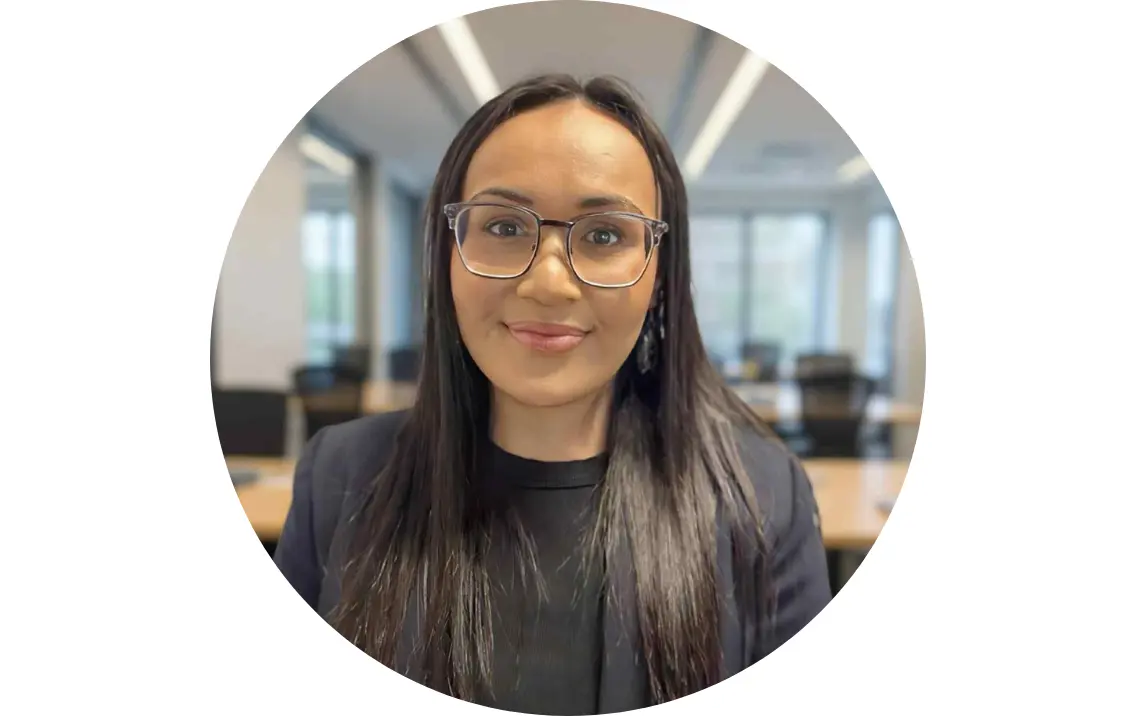
Kenihia Rei-Maynard (Ngāti Porou) is a peer team coach at Pathways in Kirikiriroa Hamilton. Her team supports tāngata whai ora experiencing mental health and addiction challenges with housing, recovery and women’s crisis respite.
She has spent more than 10 years working in mental health and addiction services across youth and adult services. She’s worked in mobile, residential and specialist services, women’s wellness and women’s crisis respite, mostly in leadership roles.
Empowering others on their journey
“There's a lot I just love about my role,” says Kenihia, who became a peer team coach at Pathways four years ago. “I love growing people. I love seeing my kaimahi really step into who they are as peers and to see their confidence grow.”
Empowering others in their lived experience journey is something she particularly enjoys.
“Often our kaimahi are new on their journey of reclaiming their lived experience [of mental health and addiction]. So, for me, to see the change in them from thinking it's a liability or something that's shameful, into something that is actually a huge strength of theirs and valued significantly within our services, I love.”
Drawing on personal lived experience to help others
“I have always used my lived experience in my mahi, even before I had a recognised tohu (qualification),” says Kenihia.
“I know what it feels like to struggle, to not always have the right support around you, and what a difference it makes when someone genuinely believes in you and walks alongside you without judgement. My lived experience helps me lead with compassion, hope and understanding.”
“My leadership is shaped by my lived experience of mental health and addictions. That is really important to me – merging that with my cultural identity, where I come from, where I whakapapa [to] really tailors my practice.”
Career growth is not always linear
Kenihia says that her leadership journey “hasn’t been a straight line”. She started out as a youth worker before moving to leadership positions within the mental health and social service sector.
Over the past 10 years, she’s worked for Women’s Refuge, Barnardo’s Aotearoa, and Emerge Aotearoa, before joining Pathways in 2022.
“I’ve always appreciated the lived experience kaupapa, and it’s something I grew to love and understand more deeply. In the beginning, I just wanted to survive, do my job, be a good parent. My goals were to heal, and to give back.”
Professional development opportunities
Kenihia has a Bachelor of Social Science majoring in psychology from the University of Waikato and a Postgraduate Diploma in Health and Social Practice (with an endorsement in mental health and addiction) from Wintec.
She says that Kia Mataara training, a 12-week peer training programme created by Pathways (now delivered by Te Pou), was a key step in her educational journey to lived experience leadership. In addition, regular on-going internal learning (called “co-learning”), coaching and reflective practice, and professional development at Pathways, ensures Kenihia stays up to date in her role.
Kenihia sits on the Pathways leadership advisory group for lived experience and peer support, where issues and challenges are discussed at a national level.
“Those are the things that I do to keep sharp with my values and with our competencies,” says Kenihia.
Values-led mahi
There are certain values and skills that are key to lived-experience leadership, says Kenihia.
“You have to be authentic. You have to understand and have the capacity to be able to reflect deeply, and to be self-aware. You have to be able to inspire hope through our lived experience or peer leadership lens. Boundaries are also very important, to navigate what’s appropriate, to sit in discomfort and regulate your emotions.”
Ensuring that her personal values align with the values of her organisation is essential.
"We have a saying in Pathways, “ahakoa te aha”, and it's something that 100% resonates with me. It's in our DNA. What it means is we do whatever it takes to ensure that our tāngata whai ora and kaimahi get the support that they need."
Being a voice for lived experience is part of the leadership role.
“I'm a proud advocate for peer lived experience and I'm happy to always be there - to have a kōrero, to give information, to be a resource for my colleagues and the people we interact with."
She draws on te ao Māori concepts to articulate her leadership philosophy, and says it goes “hand in hand” with her lived experience perspective.
"If you are ‘tika’ to te ao Māori, then you are ‘tika’ to lived experience peer work.”
She describes this through the values she brings to her daily practice.
“Whanaungatanga, manaakitanga, leading with care not your ego, self-determination and rangatiratanga, wairuatanga as well – leadership through a holistic lens, a spiritual lens as well as a strategic lens.”
Leaders support other leaders
Being surrounded and supported by other leaders is the best way to develop and grow leadership skills.
“The one thing that has made a big difference in my leadership is that I have leaders who are on the same kaupapa,” says Kenihia. “These are leaders who truly believe [in me], want to understand me, and who have got my back. And they back up their words by their actions.”
Leadership is planned and purposeful – it doesn’t just happen by accident.
“It's really intentional, the kind of guidance and leadership that I get from my line managers.”
Emerging leaders need to support their wellbeing
She enjoys supporting emerging leaders, but says people need to prepare themselves for the journey into lived experience leadership.
“It’s important to be very well, and to have a wellbeing plan, and have good people around you so you can keep giving in your role. And be proud. You don’t need to know everything – have a good heart, good values, and you will be great! Good luck!”