
Sarah Watson from Te Piringa Ahuru
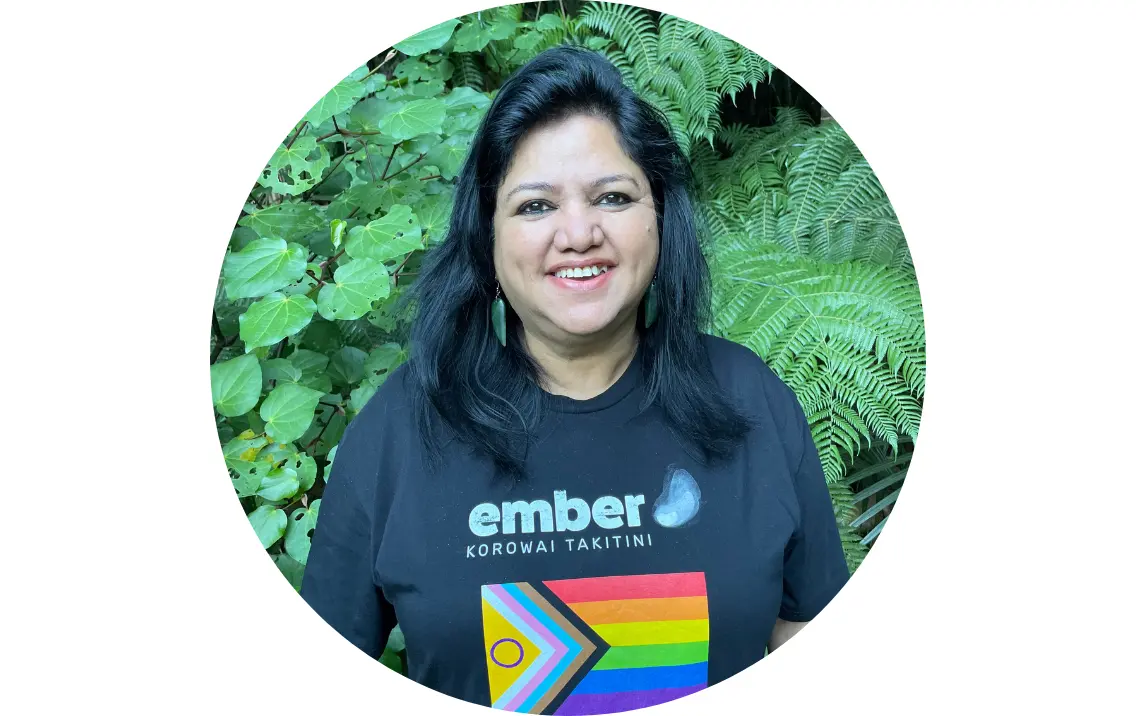
Sarah Watson (Waikato-Tainui, Ngati Wairere) is a peer support worker who works at Te Piringa Ahuru Support Hub in Papatoetoe, Auckland.
The mother of three, who has Indian and Māori heritage, has been working in the mental health and addiction sector since September 2025.
"I love that it's different every day. You don't know who's going to walk in the door."
Seeds of hope
Engaging with people in positive ways, and putting a smile on their faces, are some of the reasons Sarah loves her role.
"I call it planting the seed of hope," says Sarah. "I listen to them and pick out their strengths and [help to find] what brings them joy."
Sarah brings her lived experience of mental health and addiction to her role. This includes experiencing teenage pregnancy, family violence, and trauma. But through all of that has been her strong desire to break the cycle with her own children.
A desire to help others
After her husband died, she was affected by grief, and became addicted to alcohol, "drinking the world away just to numb the pain," recalls Sarah.
It was a conversation with one of her daughters, and then with her GP, that led her to getting help from Ember peer support services, where she attended grief classes and grew her self-esteem. In addition, she also received support from Mahi Marumaru mobile peer service.
These experiences led to a desire to help others as a support worker.
Growing skills and confidence
Sarah completed her Level 4 New Zealand Certificate in Health and Wellbeing and some workshops with mental health and addiction educator Peter Thorburn. DRIVE Consumer Directions Counties Manukau also played a pivotal role in Sarah’s peer support journey. “They believed in me and supported me in my first job after 35 years of being a mother, wife and ‘Grammy’ to my ‘grandmonsters’.”
Ruth Cheeseman, Ember’s Peer Employment Training facilitator and DRIVE coordinator, also played a key role in Sarah’s journey. “Without attending that P.E.T (Peer Employment Training) class, I wouldn’t be in this job,” she says.
Sarah says that doing workshops and volunteering for community roles has helped her grow in confidence personally and professionally.
“Getting myself amongst people and just talking to them, it opened me up... if any opportunity came about, I just took it.”
In particular, volunteering with the He Kākano team – “coming together to cook, talk and eat” and occasionally cooking for communities in need – has given her sense of purpose. DRIVE Women’s Recovery Group – a monthly hui focused on crafting, coffee and connection for women in recovery – also helps fill her cup.
To grow her leadership skills, Sarah would like more opportunity to collaborate with other services, and additional training to help her support tāngata whai ora experiencing auditory hallucinations. Sarah also recently joined Te Ahi Kaa, the Māori cultural advisory team at Ember, and feels privileged to work alongside leaders Peti Deed and Max Williams, bringing te ao Māori into her workplace.
What it takes
Qualities that she thinks are essential for peer support workers are patience, passion, humility, and being able to listen without judgement. “[And] being brave enough to ask questions ... [and] trying to find something that will bring hope and bring change,” says Sarah.
She says it is important to treat someone with respect.
“Treat someone how you’d like to be treated.”
A sense of humour can also help. “It breaks the tension... Humour is good, it is good for the soul.”