
Trevor Hitchlock from Health New Zealand | Te Whatu Ora Te Tai Tokerau
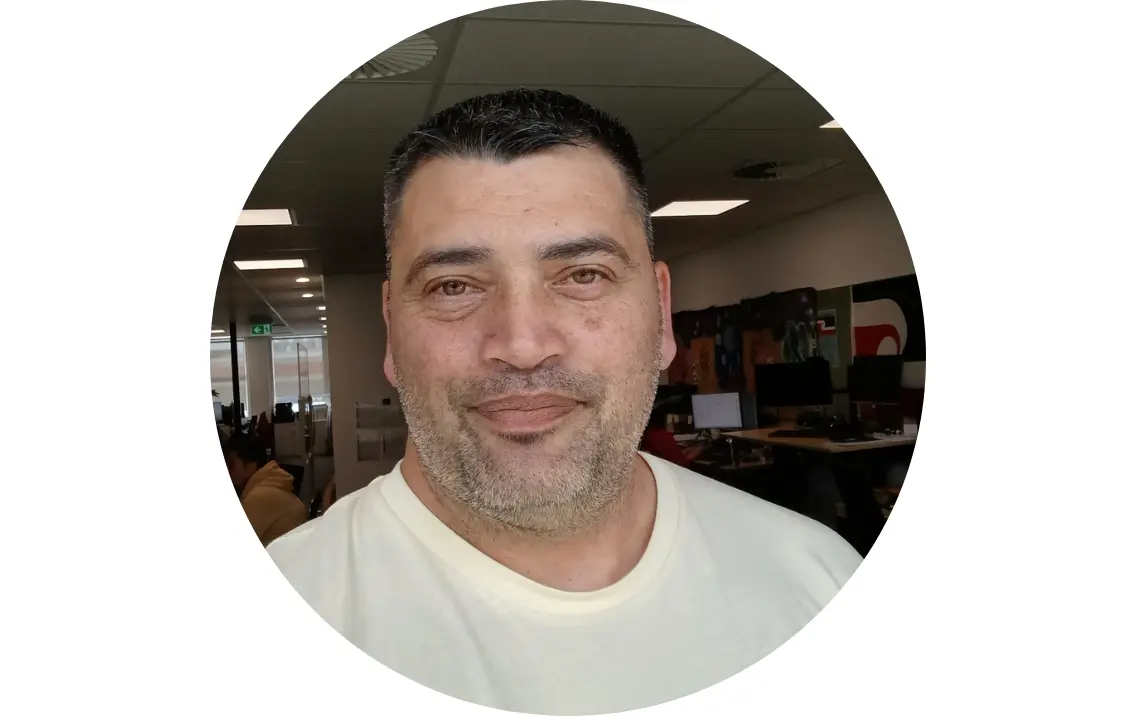
Trevor Hitchlock (Te Uri O Hau, Ngāti Whātua o Kaipara) has been working in lived experience for four years, but the journey to this point has been more than a decade.
"I come from lived experience and addiction," says Trevor, who is the Lived Experience Professional Lead for Mental Health and Addiction Services at Health New Zealand | Te Whatu Ora Te Tai Tokerau. "By the grace of atua and whānau support, and a lot of hard mahi, it's now been 14 years since I made the decision to turn my life around, and life is great."
His role, based in Whangarei, involves providing strategic leadership and oversight of the consumer and whānau peer support workforce across Te Tai Tokerau (Northland), and advocating nationally for systems change.
“Quite simply, I love all of it,” says Trevor of the mahi. “I'm always ensuring tāngata whai ora and whānau voice remain central to mental health and addiction services design and delivery.”
Driven to make a difference
Trevor started his career in peer support, which he describes as “foundational” to everything he does now.
At Ngati Hine Health Trust, he worked his way up to a leadership role as the community AOD program co-ordinator before moving to Health NZ | Te Whatu Ora Mental Health & Addiction Services as the consumer and whānau lead, then consumer and whānau team manager, before stepping into his current role at Health NZ.
Trevor is driven by a strong sense of social justice, and a desire for equity and change, particularly for Māori and Pacific communities.
"The ability to represent lived experience respectfully at a senior management level regionally and on a national stage as part of a collective with my like-minded and passionate peers, influencing policy and practise to uphold Te Tiriti principles and kaupapa Māori approaches, and for me in particular, helping to address inequities and improve health outcomes for Māori and Pacifica."
Advocacy for lived experience is important to him.
“To influence and shift common narratives of stigma, discrimination, to promote understanding, and support the recovery of whanau-centred hauora for our whānau and tāngata whai ora alike.”
Shaped by people
Trevor credits the people around him as shaping forces in his leadership.
"I've been very fortunate to have had some amazing leaders guiding and influencing me."
One stands out: whaea Pam Armstrong.
"[She is] one of the best managers I've ever had the privilege to work for and learn from," says Trevor.
She taught him the importance of listening and reflecting on his ideas and actions, and instilled in him the importance of values such as tika, pono and aroha.
"Everything I do, I try and do it the correct way, the right way, [and] everything is done with love ... especially in a mental health and addiction service setting for our tāngata whai ora and our whānau.”
Building qualifications
Trevor's educational journey mirrors his career: steady and purposeful.
He began with a Level 4 qualification in mental health and wellbeing in 2013, then completed the Matatini Ora, New Zealand Diploma in Māori Public Health (Māori Mental Health and Addiction) through Te Rau Matatini.
He also undertook project charters and management training through Te Tāhū Hauora Health Quality & Safety Commission, and completed a Foundations For Lived Experience Best Practices programme at AUT.
He encourages emerging CPSLE leaders to seize any educational or learning opportunities to grow and develop, including computer literacy skills. “I wish I had put a bit more effort into that lol [early in my career] and perhaps I still will!”
Values-led leadership through a te ao Māori lens
For Trevor, the qualities essential to lived experience leadership are rooted in te ao Māori: whanaungatanga - making connection and building trust through whakapapa; manaakitanga - nurturing relationships and enhancing the mana of tāngata whai ora and whānau; and kaitiakitanga - guardianship of the kōrero entrusted to him.
Underpinning all three, for Trevor, is consistency.
"I always try and stay true to what I'd expect, especially with tikanga Māori values: doing everything consistently with tika, pono and aroha."
His lived experience, he believes, gives him a particular kind of credibility in the room.
"Lived experience gives me the ... relatability for our tāngata whai ora and whānau in order to be able to build that trust and to gain kōrero from them, and to be the kaitiaki of their kōrero."
Advice for emerging leaders
Trevor encourages kaimahi to develop an unapologetic sense of pride in themselves, based on advice he received from Matua Moriki Hogan from Ngāti Hine Health Trust.
"Be proud of who you are ... wear a suit to that pōwhiri and that whakatau. It does not matter to be whakamā if you are the only person in the room wearing a suit. What it shows is our commitment and our passion towards the kaupapa that we do and how we do it."
He also encourages CPSLE kaimahi to embrace life-long learning. He has a whakataukī that guides him.
"Ko te manu e kai ana i te miro, nōna te ngahere. Ko te manu e kai ana i te mātauranga, nōna te ao."
The bird that eats the miro berry owns the forest. The bird that consumes knowledge owns the world.
"Study is huge. We can get to these places, but if we don't have the learnings there to be able to make the changes that we're asking for, how do we do it?"
He encourages emerging leaders to be strong, to be brave, and to be steadfast in their mahi.
"Kia kaha, kia maia, kia manawanui."