
Whakapapa
Read about the Keeping it Real | Kia Pono te Tika whakapapa.
Keeping it Real | Kia Pono te Tika provides a vision for what kaimahi (health workers) need to know and do when supporting tāngata whai ora and whānau. The mental health and addiction sector has widely used the framework for nearly two decades, with many people from the sector contributing to the framework updates over the years.
The framework first launched in 2008
Let’s get real was launched by the Ministry of Health in 2008. Te Pou has since held a leadership role in supporting the use of Let’s get real.
The development of a competency framework was actioned in Tauawhitia te Wero: Embracing the Challenge. National Mental Health and Addiction Workforce Development Plan 2006-2009 (Ministry of Health, 2005). The development involved several rounds of national consultation with people across the community and sector. Based on similar frameworks in the UK, Let’s get real adopted a capabilities approach which included values and attitudes.
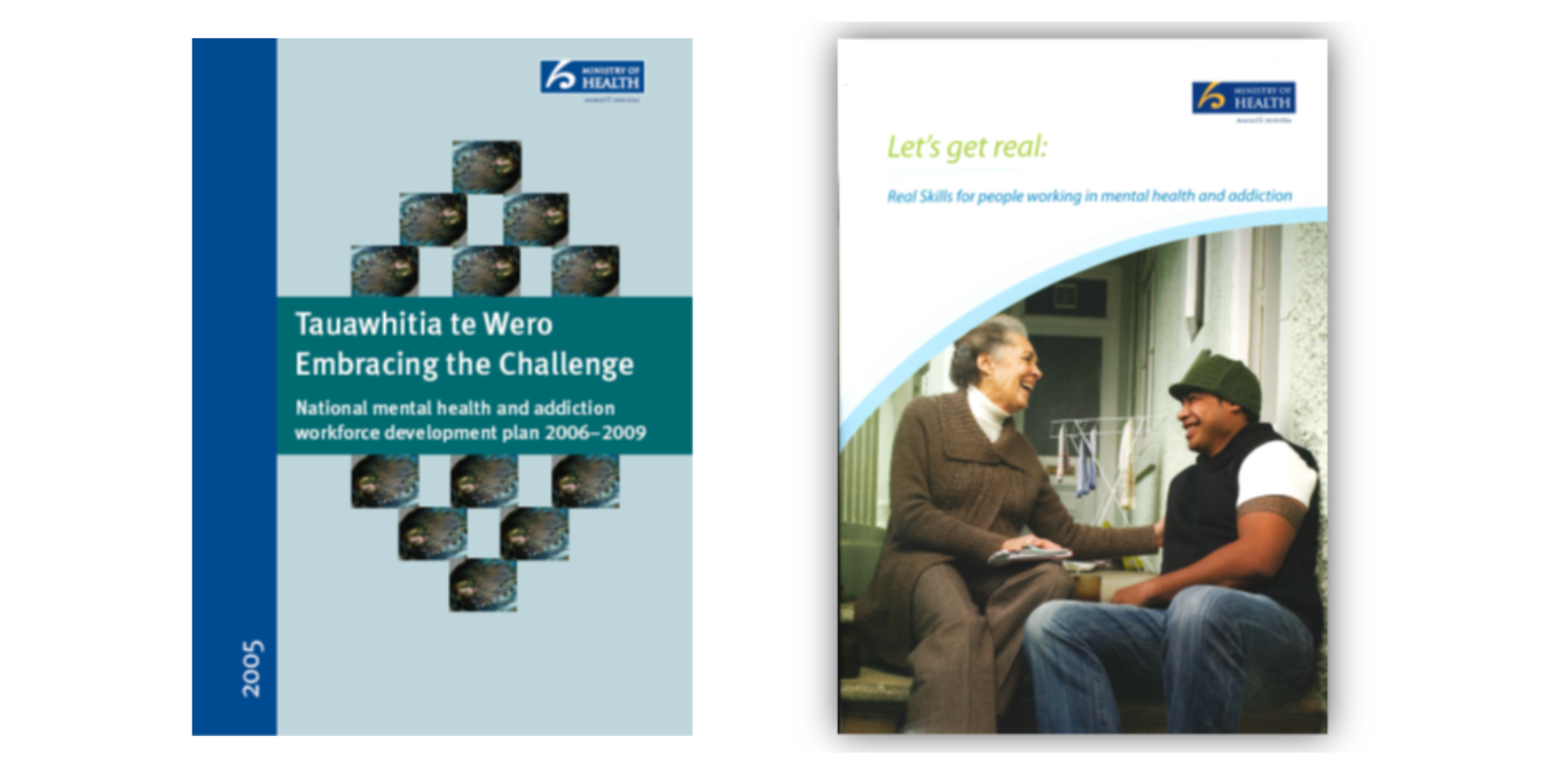
The 2018 refresh broadened the scope to the wider health workforce
Let’s get real was refreshed by Te Pou in 2018, through a series of stakeholder engagement. The refresh expanded the scope of the framework to include the whole health workforce, recognising that tāngata whai ora and whānau require an effective response wherever they seek support for wellbeing.
Te Pou continued working collaboratively across the health sector and established a network of Let’s get real champions. In 2019, Let’s get real was recognised at The Mental Health Service (TheMHS) Awards, winning the ‘Program or Service: Education, Training or Workforce Development’ award.
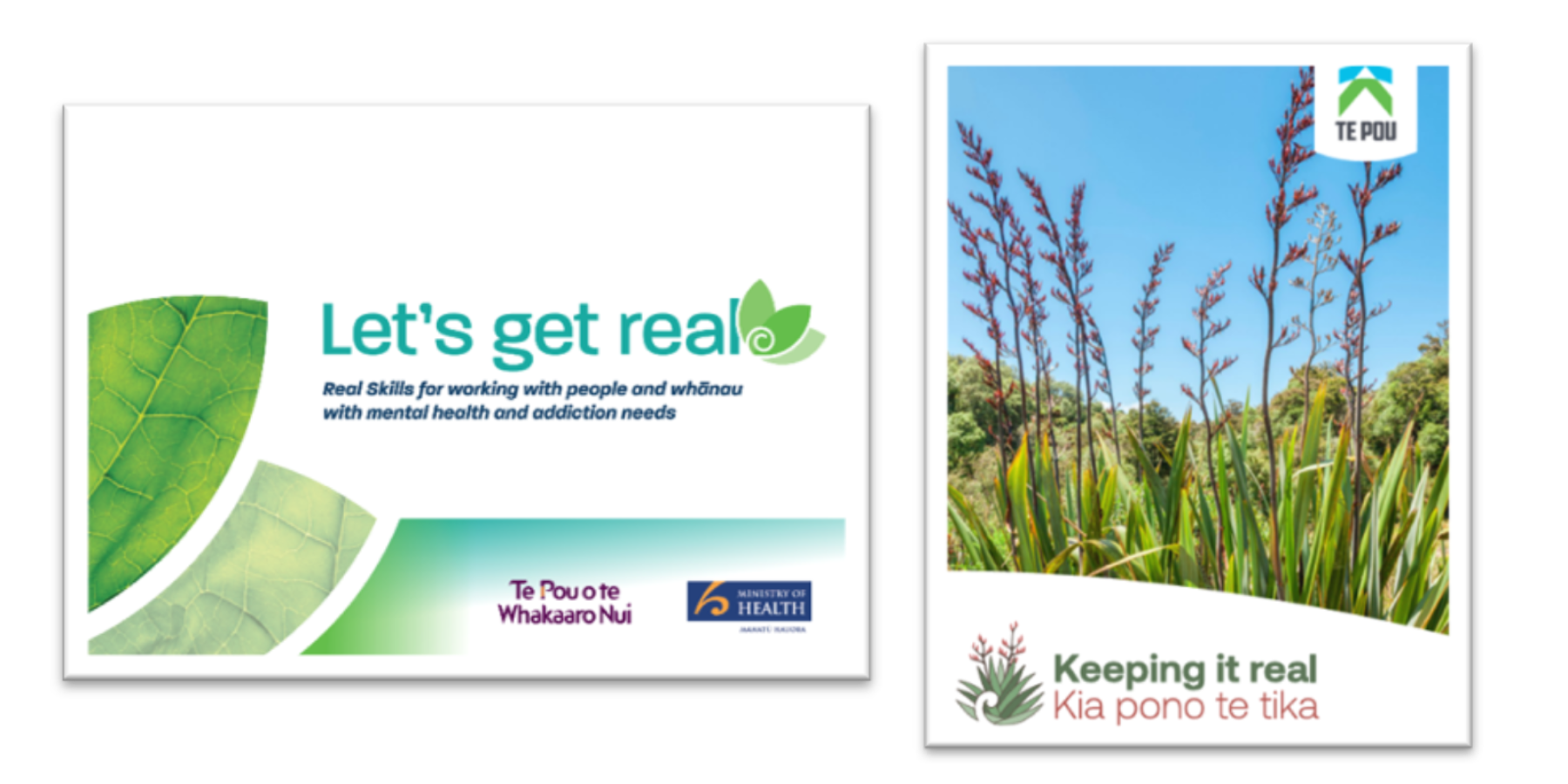
The 2025 update evolves the vision with a new title and logo
To respond to the changing needs of our communities and workforce, the vision has now evolved into Keeping it Real | Kia Pono te Tika. The new title has been developed through stakeholder engagement and guidance from Māori and lived experience leaders. It acknowledges the previous iterations of the framework and signals future progress in Aotearoa New Zealand in relation to Te Tiriti o Waitangi.
The new logo is inspired by the harakeke plant and the koru frond, both rich symbols of strength and continuous growth in te ao Māori. Just as the harakeke thrives through its interconnected leaves, this framework weaves together collaboration and holistic wellbeing. The unfurling koru sits within the protective and nurturing environment of the harakeke, representing the ongoing journey of learning, development, and resilience. Together, these symbols reflect a holistic approach to health, emphasising the nurturing of relationships, the importance of collective growth, and the unity that strengthens and sustains us all.
The framework has been updated to include key principles and practices that build awareness, understanding, and skills to promote equity, cultural safety, diversity, and inclusivity. Te Tiriti o Waitangi principles and mātauranga Māori are embedded throughout the framework, recognising that achieving equitable health outcomes for all tāngata whenua is paramount.

Sector leaders and kaimahi had a significant role in the update
Te Pou thanks all contributors to the updated framework, which was developed through extensive stakeholder engagement to honour Te Tiriti o Waitangi and reflect lived experiences and diverse realities.
Initial discussions with the sector were undertaken mid-June 2024. These discussions helped identify opportunities for strengthening the framework, as summarised in Let’s get real - Engagement findings 2024.
An external reference group which included leaders from the workforce development centres and various addiction and mental health organisations provided guidance across the project duration. This ensured the framework update was informed by a range of key perspectives.
During the development phase, four working groups had a key role in informing decisions and shaping the framework updates:
- lived experience working group
- Māori working group
- older people working group
- Te Pou working group.
Additional sector stakeholders were also involved in informing and reviewing the framework.

Resources
Te Pou has a wide range of evidence-based resources and tools to help the addiction and mental health workforce.
Learn MoreOur work
Te Pou works alongside addiction and mental health services to understand their priorities and workforce challenges.
Learn More